sculptures

40 years an artist

Margriet Smulders —

40 years an Artist

   Solo show

on view – 18 July 2025

a selection of  PRESS
Focus Magazine – 40 jaar kunstenaar – 27 juni 2025
The Guardian – Its a knock out–  14 may 2025
The Wick Culture –  16 May 2025
  • 1999 – 2003 – Sirens & Leda – The early beginnings of her career and floral still lives

  • 2005 – 2009 – Get Drunk & Amor Omnia Vincit & Bloody Hell  A deeply personal period surrounding her open-heart surgery

  • 2010 – 2013 – Come to me & This gives life to me The time of her mother’s passing and the transition to digital photography

  • 2014 – 2016 – It shines it whispers & when the hurly-burly’s done – Her inspiring move and journey to Indonesia

  • 2017 – 2020 – Life size nature – The start of her work with biological flowers and use of more different flowers

  • 2020 – 2024 – Rococo & Secret Garden – A celebration of life and 25 years as a still life photographer

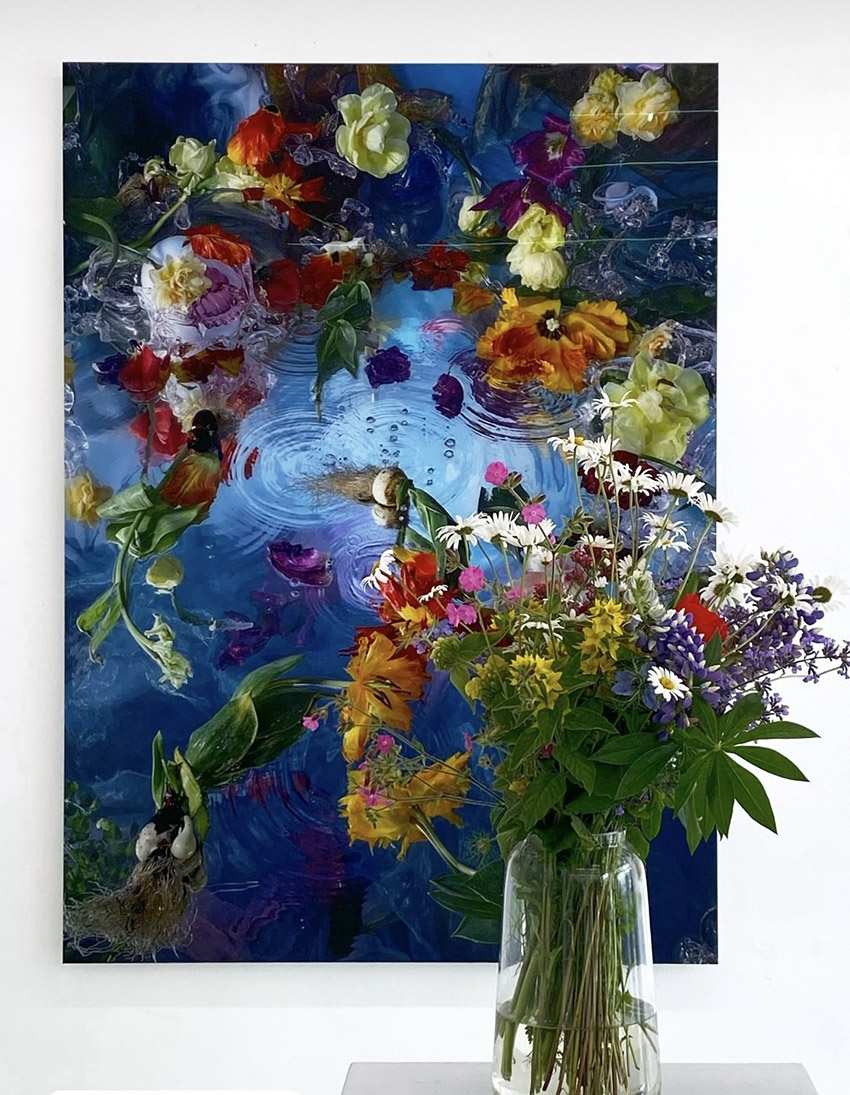
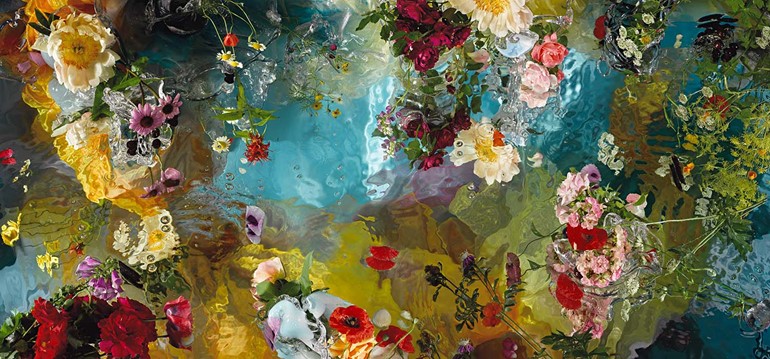
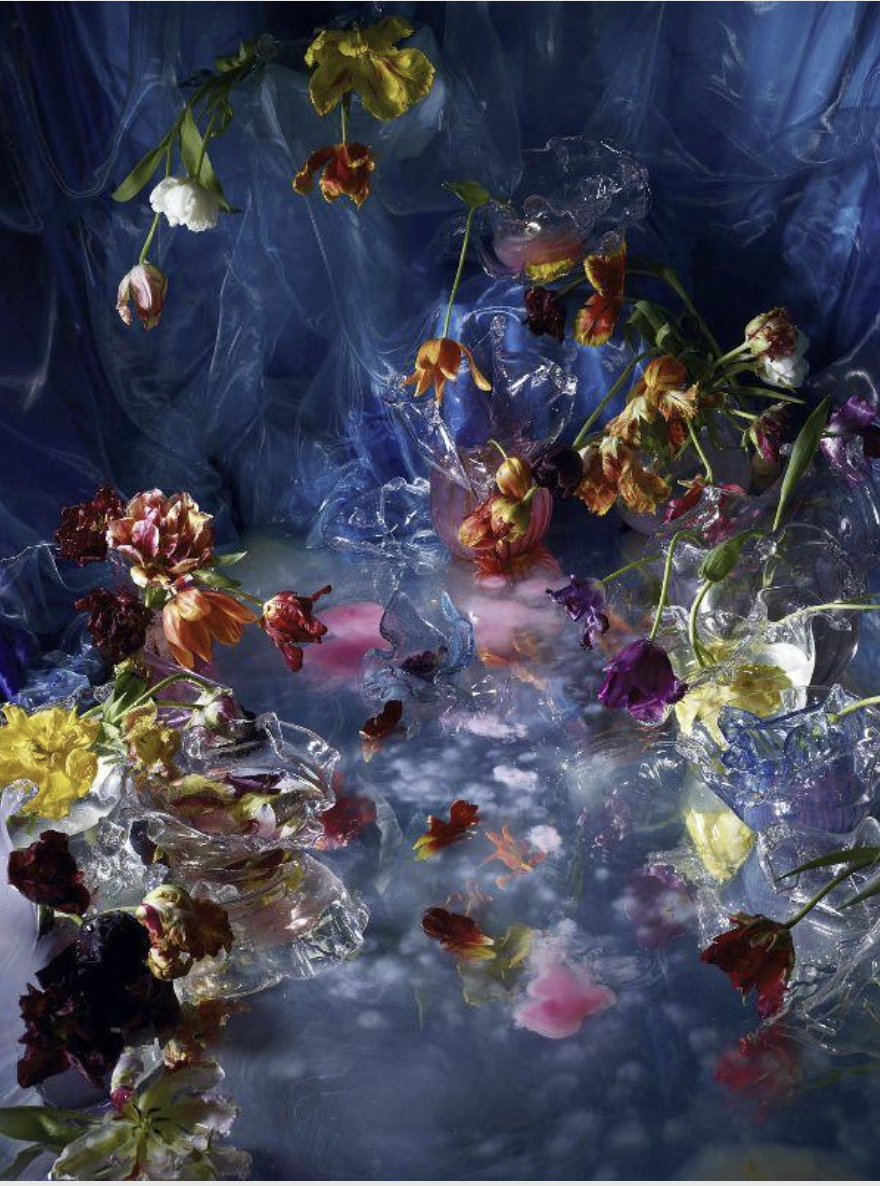
The central subject in Smulders’ photos are flowers. Margriet, who is named after a flower herself, has been fascinated by flowers and plants since childhood. These are always present in her art; sometimes incorporated as an element in a performance or space, sometimes – as in the works exhibited here – in all their glory. For the artist, flowers symbolize the course of life and the beauty of existence.

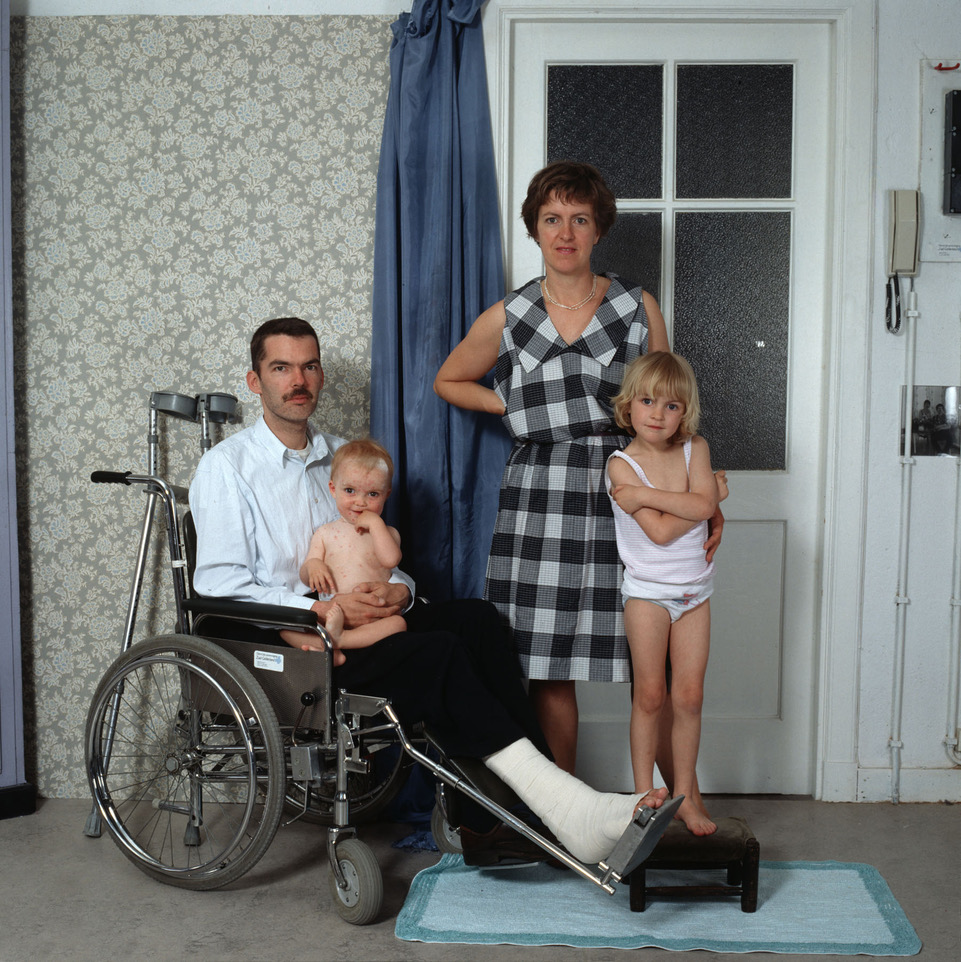
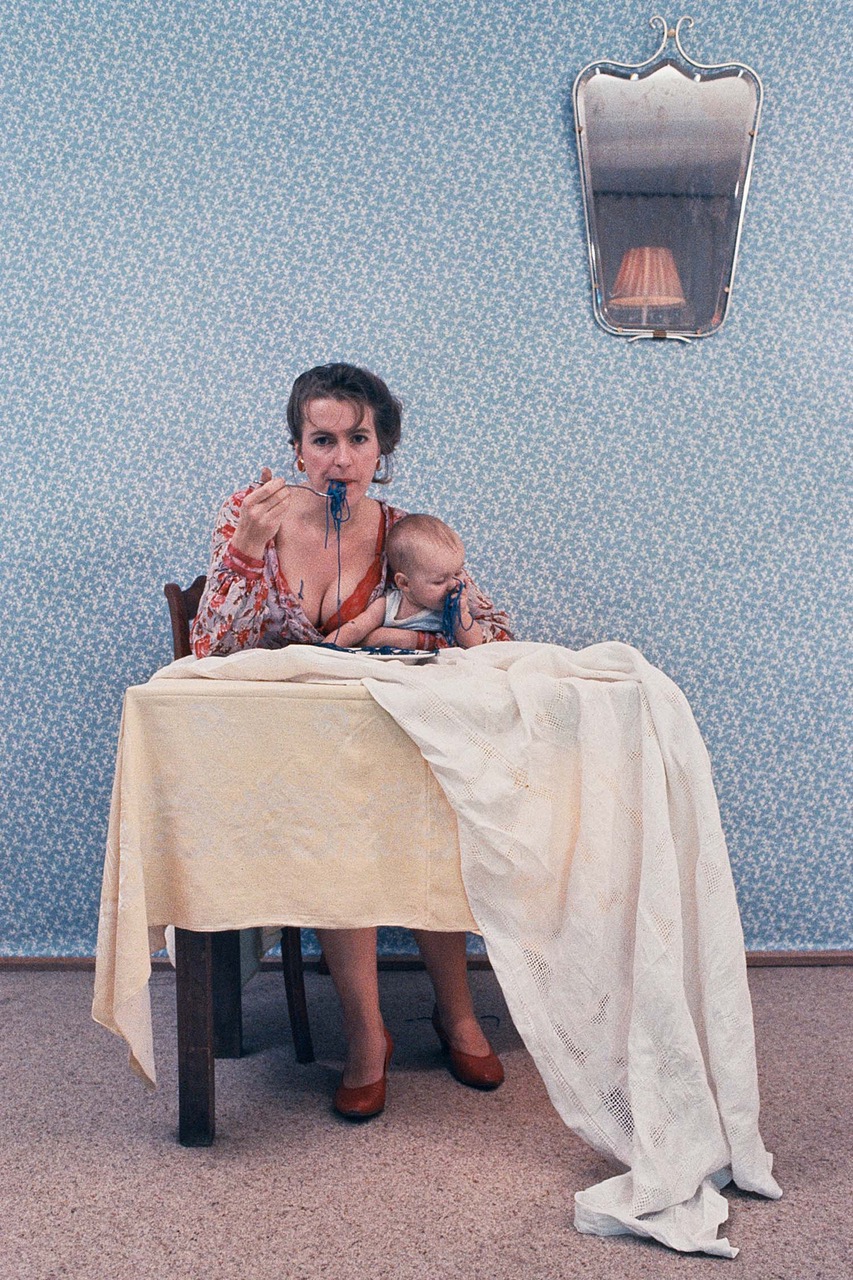
The flowers in Smulders’ work have another meaning. She makes her photos and series from a strong feminist perspective. From the Family / Maternité series from the period 1987-1995 to the photo series Uit de cocoon (1999) made in India for ICCO and WORK (1998) commissioned by Randstad, reflection on the position of women is central. This perspective is also present in her recent work. Initially, Smulders depicted abstracted feminine forms in her photographic flower still lifes with the flowers themselves. Over the years, this reference has become less direct and femininity lies mainly in the beauty, sensuality and fragility of the flower.

Smulders’ work can also be placed within a long tradition that uses flowers as a subject. In the seventeenth century, a period from which Smulders draws a lot of inspiration, the flower still life flourished as a popular theme in painting. Examples include the beautiful flower still lifes by Rachel Ruysch (1664–1750) and

Elsemarijn Bruys ~ Minimal Art on Acid in Stedelijk Museum Schiedam

In her new work Minimal Art on Acid, Elsemarijn Bruys takes her cue from minimal art, an art movement from the 1960s in which subtle objects and small interventions in a space make you aware of your surroundings and invite you to look at them in a new way. Bruys, however, goes a step further than traditional minimal art, transforming the attic space at the Stedelijk Museum Schiedam with a grand gesture rather than a subtle intervention. The museum’s monumental eighteenth-century wooden roof structure plays a central role in her design. The lines of the roof, the pillars and the depth of the space inspired Bruys to create an installation in which moving mirrors repeat and distort the space. Visitors see not only their own reflection but also that of others, thereby themselves becoming part of the installation and the space.…

Marie Pop – Le studio Perdu

Le Studio Perdu

Marie Pop


In her latest series, Le Studio Perdu, Marie Pop delves into the hidden Parisian studios of the early 20th century, the era when photography was staged and a time when female artists were reclaiming their voices and gaining recognition. Yet, it prompts you with questions: Does the work take place at a different time, in a different place? Is who we see a model or a muse? A creator or a patron? A man or a woman, or someone existing in between? Marie Pop explores the duplicity of meanings. Le Studio Perdu masterfully deceives the audience, challenging what may appear obvious: the era depicted in the artwork, the artist’s identity, or even the role of the viewer. Simultaneously paying homage to the art produced by historical female figures, Marie Pop’s artworks stand as autonomous creations while also referencing the lost female talent in art history.


In her debut exhibition, The Opulent Temple of the Lost Paradise (2020), which explored the loss of lives against the backdrop of the Corona pandemic, Marie Pop embarked on a long artistic journey exploring the depth of emotions. In the following year, The Lost Wonders of the Future Paradise illuminated the prospects of hope and a new beginning, ultimately garnering tremendous success at Art Rotterdam 2021 with all the artworks nearly selling out. Now, Le Studio Perdu unveils Marie Pop’s new chapter, delving into pressing matters within the art world while retaining the pure joy of aesthetics and provoking thought in viewers.


Marie Pop defies categorisation, moving between the realms of minimalism and expressionism while embodying a fluid identity of a woman, a man, and everything in between. As an artist, her versatility knows no bounds, extending to the mediums of painting, photography, sculpture, installation, and even performative art. As she guides you behind the scenes, immersing you in her creative process, paradoxically, you find yourself standing on the stage.


Marie Pop_Lost Stories Found in the Lost Studio

– by Pieng-Or Patcharasoravut

Opening

— Sat. 24  June

We welcome you from
17.00 – 19.00

Location

Josephstraat 164
3014 TX Rotterdam

Opening Hours

Thu & Fri   11.00 – 17.00
Sat              13.00 – 17.00
Wed & Sun by appointment only

Kunstrai / Art Amsterdam

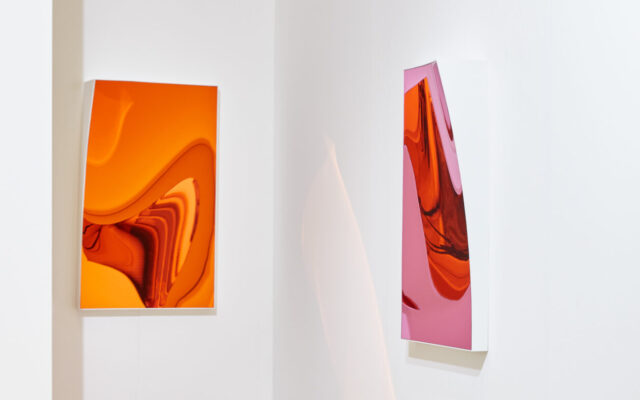
Contour Gallery is very excited to present the first artfair presentation in a solo booth with sculptures by the talented Dutch artist Elsemarijn Bruys (’89)

Elsemarijn work is on the boundary of art, design and perhaps even fashion. With these spatial works, she plays with reflection, perception and esthetics.  They invite to discover, that is what art for me is all about

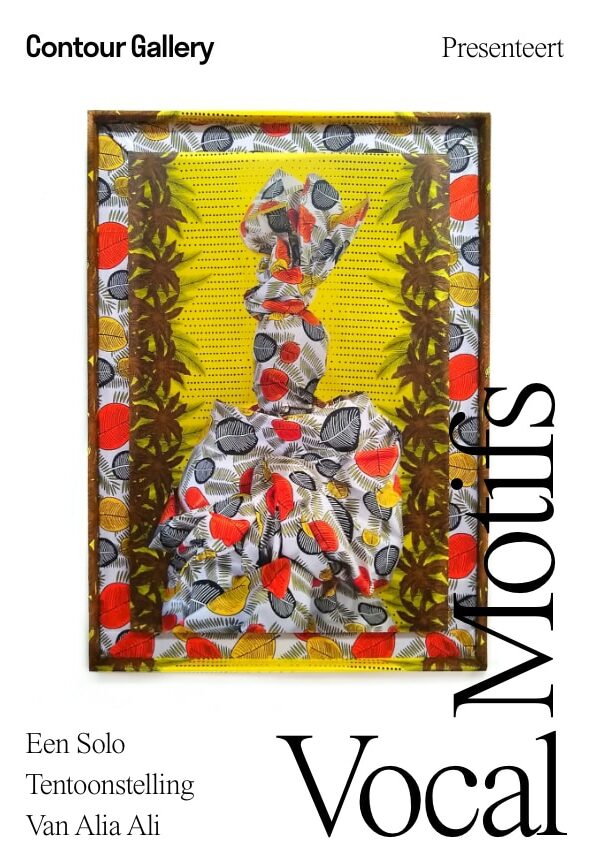
Vocal Motifs

Alia Ali —
Vocal Motifs

Solo show:
25 November
Extended  > 23 January

PRESS:
NRC in Beeld – 20 nov 2021
Elle Italy – 24 nov 2021  (Eng version upon request)
NRC Reportage – 27 nov 2021
Artsy Vanguard  – 1 dec 2021

In the three series, FLUX, MIGRATION and INDIGO, which are central to the exhibition ‘Vocal Motifs’, Ali harks back to personal experiences. Textile, the common thread in these, is a material with a lot of meaning for her.

As the daughter of a Yemeni father and Bosnian mother, Alia Ali (1985) grew up between different languages ​​and cultures, but without a permanent home. Even today, traveling and migrating are part of her existence. Being constantly on the road contributes to Ali’s choice to express herself through a universal visual language, namely her works of art.
Ali’s multimedia work, in which textiles have an important position, fits in with a number of important developments in art history that started in the last century. By bringing together materials, colours and patterns and by letting go of the two-dimensional, Ali expresses her view on themes such as language, culture and religion in her photographs in her own unique way. In this way, Ali takes her own innovative position within the existing traditions.

Opacities can coexist and converge, weaving fabrics. To understand these truly one must focus on the texture of the weave and not on the nature of its components. For the time being, perhaps, give up this old obsession with discovering what lies at the bottom of natures. […] This—here is the weave, and it weaves no boundaries.


—Édouard Glissant

INIDIGO

MIGRATION

Migration is an appeal to all travellers not to let their future be determined by the rigid, one-dimensional rules that prevail at their destination.

The series shines a spotlight on the ability to rethink and reshape your idea of ​​the future with all the multidimensional knowledge you carry, rather than settling for the present as your final destination.

the potential of the unintentional

Rubén Dario Kleimeer


The potential of the unintentional

In addition to Rotterdam, Ruben Dario Kleimeer now also abstracts the cities of Amsterdam and Brussels in the series Imaginary Perspectives. From his imagination  he photographs cities in Europe.
Through the cut-out and choice of images, the love for architecture and skateboarding come together. Ruben approaches his work with an almost dogmatic slant. Balanced, tight and abstracted from the environment. In an intriguing way, he focuses on special forms in the periphery of the city.


OPEN

OCTOBER 8 –

13 NOVEMBER

do-vrij-zat